
Hormone Testing for Men and Women: What Blood Tests Can and Cannot Tell You

Hormone testing for men and women is useful when your symptoms and an examination point to a question a blood test can answer. It is much less useful as a general wellness score, because a single level is a snapshot of a hormone that changes with the time of day, sleep, illness and medicines.
For men, the key test is usually testosterone taken in the morning and repeated before any diagnosis is made. For women aged 45 or over with typical symptoms, menopause is usually identified from age, periods and symptoms, not from a blood test.
Key takeaways
- A hormone test answers a clinical question; a result outside the reference range is not a diagnosis on its own.
- Low testosterone should be diagnosed only when symptoms fit and morning, ideally fasting, levels are clearly low on repeat testing.
- In otherwise healthy women aged 45 or over, perimenopause and menopause are usually identified without blood tests, and FSH is not advised.
- Bring your medicines, earlier results with units and reference ranges, and ask what question the test is answering and whether the result will change what you do.
What a hormone test does and does not show
A hormone test is useful when your symptoms and an examination point to a question a blood level can answer. It is much less useful as a general wellness score for someone who feels tired but has no other pointers.
A result is one snapshot. Hormone levels shift through the day and the month, and they change with illness, poor sleep and some medicines. A single number tells you little about how you have been over the past few weeks.
A value outside the reference range does not mean disease on its own. Testing many hormones at once also raises the chance of borderline results, which tend to lead to more tests that may not change what you do.
So the better question is not "what are my hormone levels?" but "what decision will this result help with?" If the answer is unclear, the test may add little. For women over 45 with typical menopause symptoms, for example, guidance says blood tests are usually not needed to identify perimenopause or menopause. That is
covered in the women's section.
Testing in men
For men, testosterone is the main hormone test. Guidelines support diagnosing low testosterone only when symptoms and signs fit the picture and the blood level is clearly and consistently low. A low number without symptoms, or symptoms without a low number, does not settle it.
Timing matters because testosterone is highest in the morning. The Endocrine Society recommends a fasting morning total testosterone as the first test. UK guidance advises sampling before 11 am, ideally fasting.
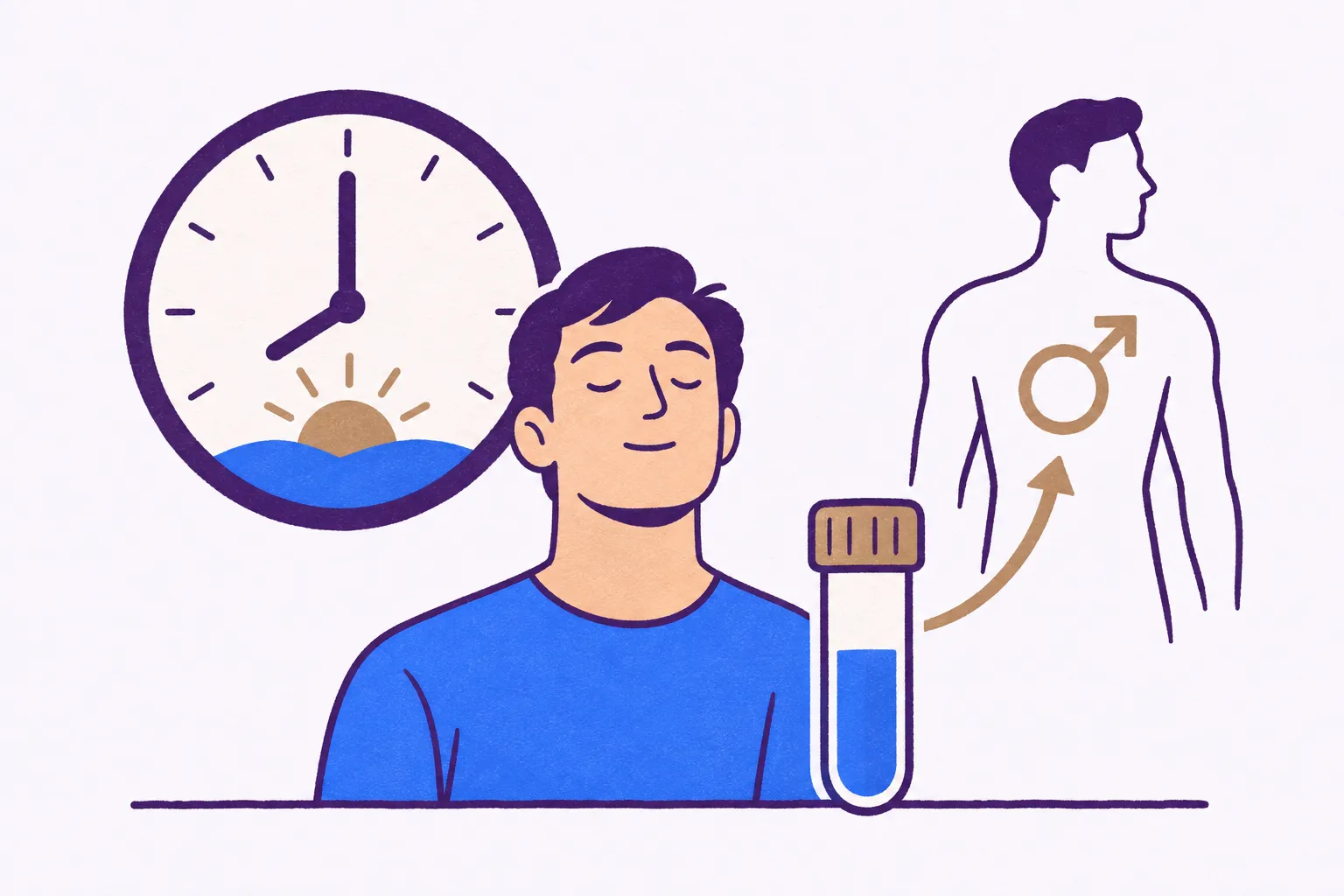
Fasting is not settled, though. Healthy volunteers showed levels up to 30% higher when fasting, but one UK laboratory review of 213 patients found no significant effect. Following your doctor's instruction on fasting is the practical answer.
Testosterone also varies from day to day, so one low result is not a diagnosis. Guidelines generally ask for the test to be repeated on a separate occasion, and UK guidance says at least two occasions for total testosterone.
Testing in women
For an otherwise healthy woman aged 45 or over, a blood test is usually not needed to identify perimenopause or menopause. Perimenopause is recognized from newly started hot flushes or night sweats together with changes in the menstrual cycle. Menopause is recognized after 12 months without a period, in women not using
hormonal contraception.
FSH (follicle-stimulating hormone) is the test most people expect. In this age group, guidance advises against it, because hormone levels rise and fall during perimenopause. A normal result on one day can be followed by a high one the next, so it does not settle the question and should not be offered to women with
typical symptoms.
Blood tests earn their place in other situations. If early menopause is suspected in a woman under 45, FSH can help. A raised result should be confirmed on two samples taken 4 to 6 weeks apart, not acted on from a single reading.
Contraception changes the picture. FSH has no value in women taking combined hormonal contraception or high-dose progestogen, so tell the doctor about any hormone medicine before a test is planned.
A doctor may also order hormone tests for other questions, such as irregular periods, excess hair growth, hair thinning or difficulty conceiving. These are interpreted alongside your history and examination, not as stand-alone numbers. Cycle timing can matter for some of them, so note the day of your cycle when you
book.
Other hormones often included in a check
Sex hormones are only part of a typical hormone check. A doctor may add other tests, but each should answer a specific question rather than fill out a long panel.
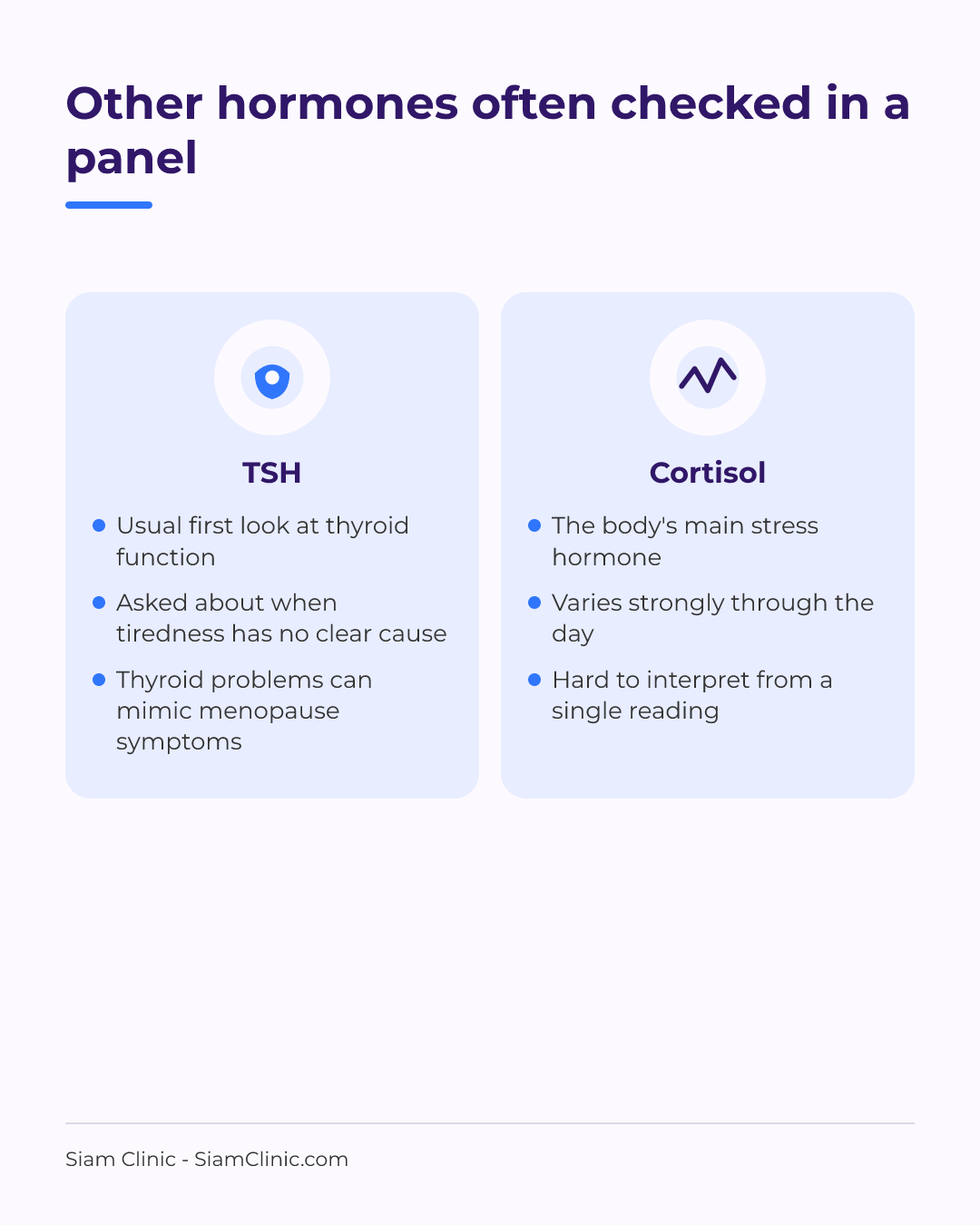
TSH (thyroid-stimulating hormone) is the usual first look at thyroid function. It is commonly asked about when tiredness, weight change, feeling cold or hot, or changes in mood or periods have no clear cause. An underactive or overactive thyroid can mimic symptoms people attribute to menopause or low testosterone.
Blood glucose and insulin relate to how your body handles sugar. They are relevant when there is tiredness, increased thirst, weight gain around the waist or a family history of diabetes. For more detail on one of these, see
Understanding Insulin Testing.
Cortisol is the body's main stress hormone and it varies strongly through the day. A single cortisol reading is hard to interpret, so doctors order it for a clear clinical reason and pay attention to the time of sampling, rather than as a general stress score.
Be cautious about home kits and long panels of saliva or urine hormones sold as wellness checks. The guidance supplied here does not support using them to diagnose or guide care. A result from a clinical laboratory, ordered for a defined question and read by a doctor who knows your history, is easier to act on.
How to prepare and what to bring
Book a morning appointment. For men, testosterone is best sampled early, before 11 am, and ideally fasting. Fasting levels were up to 30% higher than non-fasting levels in healthy volunteers, though one laboratory review found no significant effect, so ask the doctor whether you need to fast.
Bring a list of everything you take: prescription medicines, hormone products, contraception and supplements. Hormone medicines change results, and combined hormonal contraception makes an FSH test of no value. Women should note the cycle day and the date of the last period, since timing can matter.
Note how you have been sleeping and whether you have been ill recently, because both can shift a hormone level on the day. Bring earlier results if you have them. A single low value is not a diagnosis, and a doctor will usually want to compare it with a repeat sample taken on a separate occasion.
Ask the doctor four things:
- What question is this test answering? - Will the result change what we do? - When would we repeat it, and would a free testosterone or SHBG test be added if the result is borderline? - What else could explain my symptoms?
If you are from another country, ask for results with the units and reference range printed. Laboratories use different units, and guidelines use different thresholds for low testosterone, such as 264, 300 or 350 ng/dL. The same number can be read differently, so the range on the report matters more than the number
alone.
Who should be careful and when to see a doctor
Take extra care with testing if you use hormone medicines or testosterone, are pregnant, or have a history of a hormone-sensitive condition. Timing and interpretation change in these situations, so tell the doctor before the blood is drawn. Women using combined hormonal contraception or high-dose progestogen should not
rely on an FSH result.
Women aged 45 or over with typical symptoms usually do not need an FSH test to identify perimenopause or menopause, because hormone levels fluctuate. A test is more reasonable if early menopause is suspected under age 45. In that case a raised FSH is confirmed on two samples 4 to 6 weeks apart.
Ask for a medical review, rather than a wellness panel, if you notice any of these:
- unexplained weight change - very heavy or absent periods - breast or testicular changes - persistent low mood - new severe fatigue - loss of morning erections together with other symptoms such as low libido
Chest pain, fainting or sudden severe symptoms are an emergency and need urgent care, not a hormone test.
If you would like to talk through whether testing makes sense for you, Siam Clinic offers appointments with a doctor at the BISP (Koh Kaew) and Chalong branches.
Further reading: Testosterone Therapy in Men With Hypogonadism: An Endocrine Society Clinical Practice Guideline - PubMed
Further reading: The British Society for Sexual Medicine Guidelines on Male Adult Testosterone Deficiency, with Statements for Practice - PMC
Read next: About our doctor
FAQ
Can I test my hormones at home? The supplied evidence does not cover home kits or long saliva and urine panels, so there is no basis here to say they are reliable. A hormone result is most useful when a doctor orders it for a specific question and reads it alongside your symptoms, medicines and history.
Does a normal result mean my symptoms are not real? No. Tiredness, low libido, poor sleep and low mood have many causes, and a hormone level is only one of them. A normal result usually means the doctor looks at other explanations, such as sleep, mood, blood sugar, thyroid function or other medical conditions.
How often should I repeat a hormone test? It depends on why the test was done and what the first result showed. For men, a low testosterone result is normally repeated on a separate morning to confirm it. For women under 45 with suspected early menopause, a raised FSH is confirmed on two samples 4 to 6 weeks apart.
Beyond those confirmation steps, your doctor decides whether and when to test again. Repeating tests without a clear question tends to produce borderline numbers rather than answers.
Why do labs and guidelines give different cut-offs for low testosterone? Guidelines set different thresholds. The AUA uses 300 ng/dL, the EAU and ISSM use 350 ng/dL, and the Endocrine Society uses 264 ng/dL. The same number can therefore be read differently, which is one reason diagnosis also depends on symptoms
and repeat results.
If you have results from another country, bring them with the units and reference range printed on the report. Labs use different units, and a number without them is hard to interpret.
This article provides general information only. It is not a diagnosis or personal medical advice. If you have symptoms or health concerns, please consult a qualified doctor.
Sources
- Testosterone Therapy in Men With Hypogonadism: An Endocrine Society Clinical Practice Guideline - PubMed
- The British Society for Sexual Medicine Guidelines on Male Adult Testosterone Deficiency, with Statements for Practice - PMC
- An Individualized Approach to Managing Testosterone Therapy in the Primary Care Setting - PMC
- Standardising the biochemical confirmation of adult male hypogonadism; a joint position statement by the Society for Endocrinology and Association of Clinical B
- Menopause: identification and management NICE guideline
- Quality statement 1: Diagnosing perimenopause and menopause
- LH and FSH (Gonadotrophins)
More Posts

Siam Clinic Goes Global: Strengthening Medical & Wellness Tourism at Oman Health 2025
Thailand has long been recognized as a global Medical Hub, and Siam Clinic is now taking a leading role in bringing Thai aesthetic and wellness
Read More »
Siam Clinic Phuket Expands into Middle East Market, Showcasing Thai Wellness Excellence at “Thai Festival” in Muscat, Oman
Siam Clinic, a leading aesthetic and wellness clinic from Phuket, is proud to have represented Thailand’s healthcare potential at the Thai Festival, held under the
Read More »
Siam Clinic strengthens its team with special lectures on “How to be Creative for Content Creators.”
The Siam Clinic team would like to thank Khun Bright from the Loi Story page for being a guest speaker in the “How to be
Read More »
Siam Clinic supports the team to join the Train the Trainer project to enhance skills in the tourism and service industries.
Siam Clinic believes that “people” are our most valuable resource. Behind our quality and international standard services lies a strong and constantly evolving team. Developing
Read More »