Functional Urine Analysis
A structured urine-based assessment that may provide additional context beyond routine screening.

What Is Functional Urine Analysis
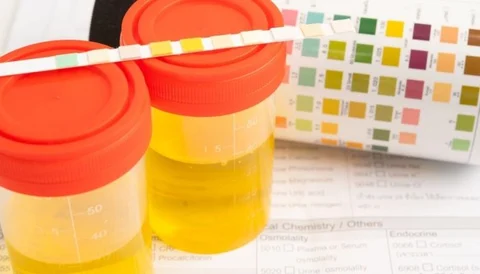
Functional Urine Analysis refers to a broader, more interpretive review of urine-based markers when additional clinical context is needed. While routine urinalysis commonly examines physical, chemical, and microscopic features of urine, more specialized urine testing may be used in selected circumstances to add further information to a diagnostic review.
In a longevity and preventive wellness setting, this page should be understood as describing an advanced urine-based assessment pathway rather than a single universal test. The aim is to support a more structured review when urine findings may contribute to a broader understanding of health status, symptom patterns, or next-step planning. This conservative framing is important because specific urine tests differ in purpose and interpretation.
Why Urine-Based Testing Can Add Useful Context
Urine can provide useful information because it contains substances filtered or excreted by the body. Standard urinalysis is commonly used to help assess issues such as urinary tract infection, kidney problems, diabetes, and other health concerns, which is why urine testing remains a familiar and practical clinical tool.
In selected cases, a broader urine-based review may also help contribute additional context when the goal is not only to look for one specific disease, but to understand patterns that may justify further discussion, follow-up, or complementary testing. The purpose is not to treat urine findings as a complete explanation by themselves, but to use them as one source of clinically relevant information.
What Functional Urine Analysis May Help Explore
Depending on the method used and the clinical context, Functional Urine Analysis may help support review of selected urine-based markers and broader physiologic patterns. This may include discussion around whether findings suggest the need for closer evaluation, repeat monitoring, or integration with other assessments. Standard urine testing can measure multiple compounds and characteristics in urine, while more specialized urine assays may be used in narrower clinical contexts.
In a practical clinical setting, this type of assessment may be considered when the goal is to add context to a larger review rather than rely on a single metric. That distinction matters because some specialized urine testing has variable specificity or may be influenced by collection timing, symptoms, supplements, and physiologic state.
Who May Benefit from Functional Urine Analysis
Functional Urine Analysis may be appropriate for people who:
- want a broader advanced diagnostic review
- are interested in preventive health and long-term wellness planning
- want additional urine-based context as part of a wider assessment
- are undergoing a more structured review of symptoms or health patterns
- want to explore selected markers alongside other diagnostic pathways
- are looking for a more thoughtful baseline within a broader clinical framework
A urine-based assessment may be particularly useful when it is chosen for a clear reason and interpreted together with other relevant information rather than used in isolation. Urine testing is widely used in clinical care, but the usefulness of any specific panel depends on the question being asked.
How This Fits into a Broader Diagnostic Strategy
At Siam Clinic, Functional Urine Analysis is best positioned as one part of a broader advanced health review rather than as a standalone endpoint.
Depending on the individual case, it may be considered alongside:
- Ultimate Checkup
- Toxic Heavy Metal Testing
- Micronutrient Profile
- Gut Microbiome Analysis
- Bioactive Hormone Panels
This kind of integration matters because urine-based findings are often most useful when they are interpreted alongside other clinical information. A single urine result may point toward the need for more context, but it rarely tells the whole story by itself.
What This Assessment May Help Clarify
Functional Urine Analysis may help support questions such as:
- Are there urine-based findings that deserve closer review?
- Would repeat monitoring or broader assessment be helpful?
- Should the next step involve observation, lifestyle review, or further evaluation?
- Would other advanced diagnostics add useful context?
- Is this a helpful baseline for future comparison?
This kind of assessment is most useful when it helps organize next-step thinking rather than create premature conclusions. The emphasis should remain on clinical interpretation, not just on the presence of an isolated abnormal value.
What This Test Does Not Do
Functional Urine Analysis can provide useful context in selected cases, but it also has limits.
It does not:
- diagnose every cause of fatigue or nonspecific symptoms
- replace full medical evaluation
- confirm causation on its own
- justify overly broad conclusions without clinical review
- remove the need for interpretation in the context of history, symptoms, and other findings
This cautious approach is important because even well-established urine tests have to be interpreted in context, and specialized urine assays may have additional limitations depending on the clinical setting and specimen conditions.
Our Clinical Approach
At Siam Clinic, we approach Functional Urine Analysis as a supportive diagnostic tool rather than a standalone promise.
We believe this type of assessment is most useful when it is:
- guided by clinical relevance
- interpreted in context
- integrated with other findings
- connected to practical next steps
- used to support thoughtful preventive planning
The goal is not to overstate what a urine-based test can do. The goal is to use it appropriately within a broader, medically responsible diagnostic strategy.
FAQ
What is Functional Urine Analysis?
Functional Urine Analysis is a broader urine-based assessment used to provide additional context within an advanced diagnostic review. It goes beyond presenting a urine result in isolation and focuses on interpretation within the larger clinical picture. Routine urinalysis examines physical, chemical, and microscopic features of urine, while more specialized urine testing may be used in selected cases.
Is Functional Urine Analysis the same as a routine urinalysis?
Not exactly. A routine urinalysis is a standard clinical test used for common screening and diagnostic purposes. Functional Urine Analysis, as positioned on this page, refers to a broader and more interpretive use of urine-based information within an advanced diagnostic pathway.
Who should consider Functional Urine Analysis?
It may be useful for people undergoing a broader preventive health review, those seeking additional urine-based context, or individuals in whom a clinician believes urine markers may contribute meaningful information to a larger assessment.
Can this test diagnose the exact cause of my symptoms?
Not necessarily. Urine-based findings can add useful information, but they should not be treated as a complete explanation by themselves. Interpretation depends on your symptoms, medical history, and other relevant findings.
Can Functional Urine Analysis replace other advanced diagnostics?
No. In some cases, it may be used alongside other assessments such as Micronutrient Profile, Toxic Heavy Metal Testing, or broader medical review. Its role is supportive, not all-encompassing.
Are specialized urine tests always definitive?
No. Some specialized urine assays have limitations and may be affected by timing, supplements, and physiologic state. Results should be interpreted carefully and may need correlation with other information.
Is this suitable even if I feel generally well?
In some cases, yes. Urine-based assessment may be included as part of a wider preventive health strategy when there is a clear clinical reason or a broader goal of establishing a more structured baseline. Routine urine testing is also commonly used in general health assessments.